

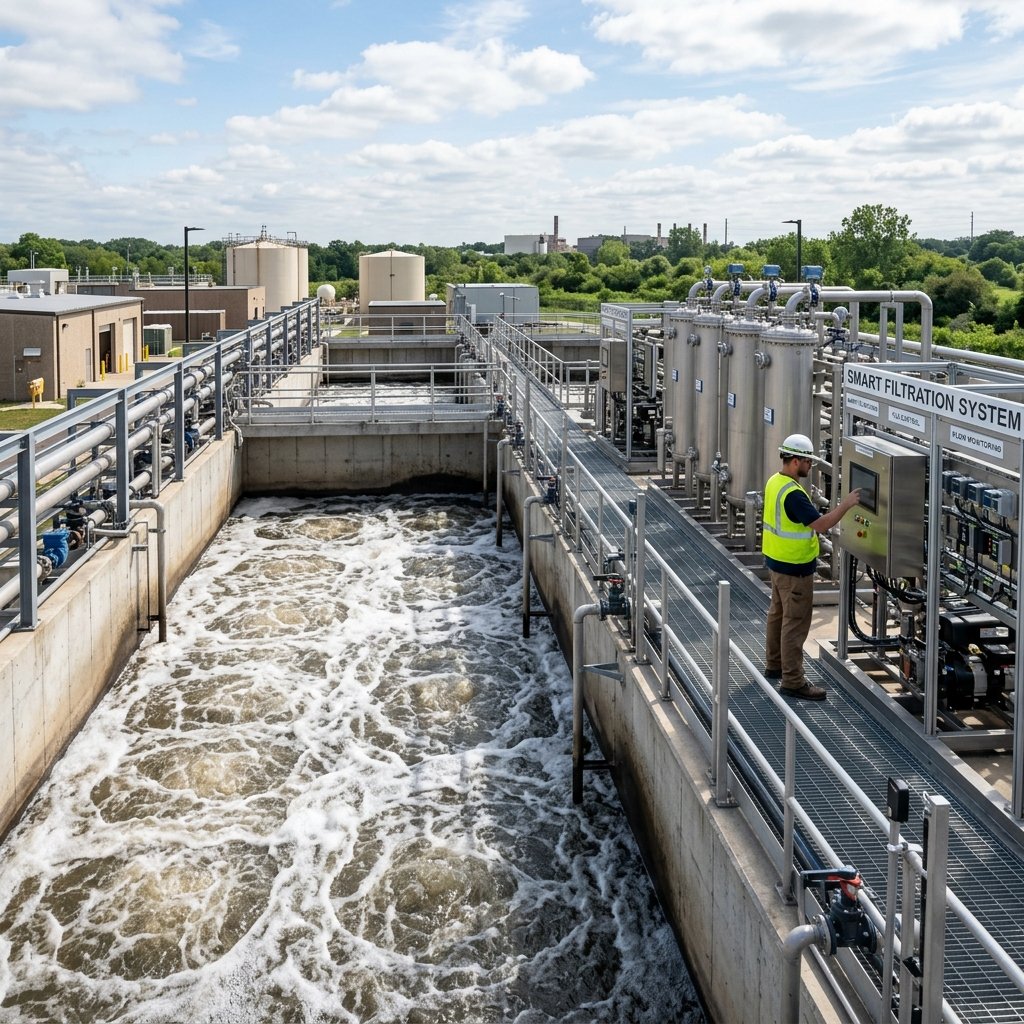
1. The Gravity Sewerage Network Layout
To minimize the electricity costs and maintenance issues associated with traditional sewer systems, Dholera’s design prioritizes gravity-based layouts:
- Slope-Designed Pipelines: Pipes are laid at calculated descending angles to allow sewage to flow naturally toward localized pumping stations without requiring active pumping.
- High-Performance Piping: The collection grid uses High-Density Polyethylene (HDPE) and Reinforced Cement Concrete (RCC) pipes, which resist chemical wear from domestic and industrial waste.
- Integrated Utility Ducts: Under the smart infrastructure layout, sewage pipelines are placed in the bottom compartment of the multi-utility ducts, isolating them from other utility feeds like power, gas, and drinking water.
2. Sequencing Batch Reactor (SBR) Treatment Technology
The core of Dholera’s wastewater purification is the SBR facility, which treats sewage through a structured cycle within a single basin:
- Filling and Aeration: Sewage enters the reactor where fine-bubble diffusers introduce dissolved oxygen, feeding microbial cultures that break down organic waste, biochemical oxygen demand (BOD), and chemical oxygen demand (COD).
- Settling Phase: Aeration is stopped, allowing the biomass solids to settle to the bottom, separating clear water from the sludge.
- Decanting & Disinfection: The clear, treated effluent is decanted from the surface and disinfected using ultraviolet (UV) treatment to kill pathogens without chemical chlorine additions.
The table below lists the technical parameters of Dholera’s sewage management network:
| System Component | Technical Details | SBR Process Targets |
|---|---|---|
| **Pipeline Material** | HDPE (Double Wall Corrugated) / RCC | Resists hydrogen sulfide corrosion |
| **Treatment System** | Sequencing Batch Reactor (SBR) | Clean mechanical filtration without high chemicals |
| **Recycling Integration** | Zero Liquid Discharge (ZLD) | Recycled into industrial cooling and landscaping |
| **Effluent Quality (BOD)** | Less than 10 mg/L | Exceeds standard central pollution board guidelines |
| **Monitoring Integration** | SCADA and Online TOC Sensors | Real-time monitoring of treated water quality |
3. Integration with the Zero Liquid Discharge (ZLD) Policy
Recycling treated sewage back into the industrial economy is a primary component of Dholera’s water conservation strategy:
- Dual-Pipe Utility Feed: Every building plot in Dholera features two distinct water inlets—one for potable fresh water, and one for recycled non-potable water.
- Non-Potable Utilization: The recycled water from the STP is pressurized and pumped back to factories for machinery cooling, toilet flushing, and green belt landscaping irrigation.
- Reduced Freshwater Demands: Recycling 100% of treated wastewater reduces Dholera SIR’s total freshwater imports from the Narmada canal system.
Frequently Asked Questions (FAQ)
#### What technology is used in Dholera’s Sewage Treatment Plant?
Dholera’s central Sewage Treatment Plant uses Sequencing Batch Reactor (SBR) technology, a high-efficiency biological process that removes organic pollutants, BOD, and nitrogen within a compact footprint.
#### How is sewage collected in Dholera Smart City?
Sewage is collected via a network of corrosion-resistant gravity pipelines laid inside underground utility ducts. The system uses gravity-flow slopes to transport wastewater to the STP with minimal pumping energy.
#### What happens to the recycled water from the STP?
Recycled water from the STP is returned to the city through a dedicated non-potable water grid to supply industrial cooling systems, municipal landscaping, and toilet flushing systems, supporting the city’s ZLD goals.
Download Dholera SIR 2026 Investor’s Kit
Get instant access to the official planning documents: Dholera Investment Handbook (PDF), 2026 Land Price List, TP Zone & Village Map, and the NRI Buying Guide.

Join The Discussion