

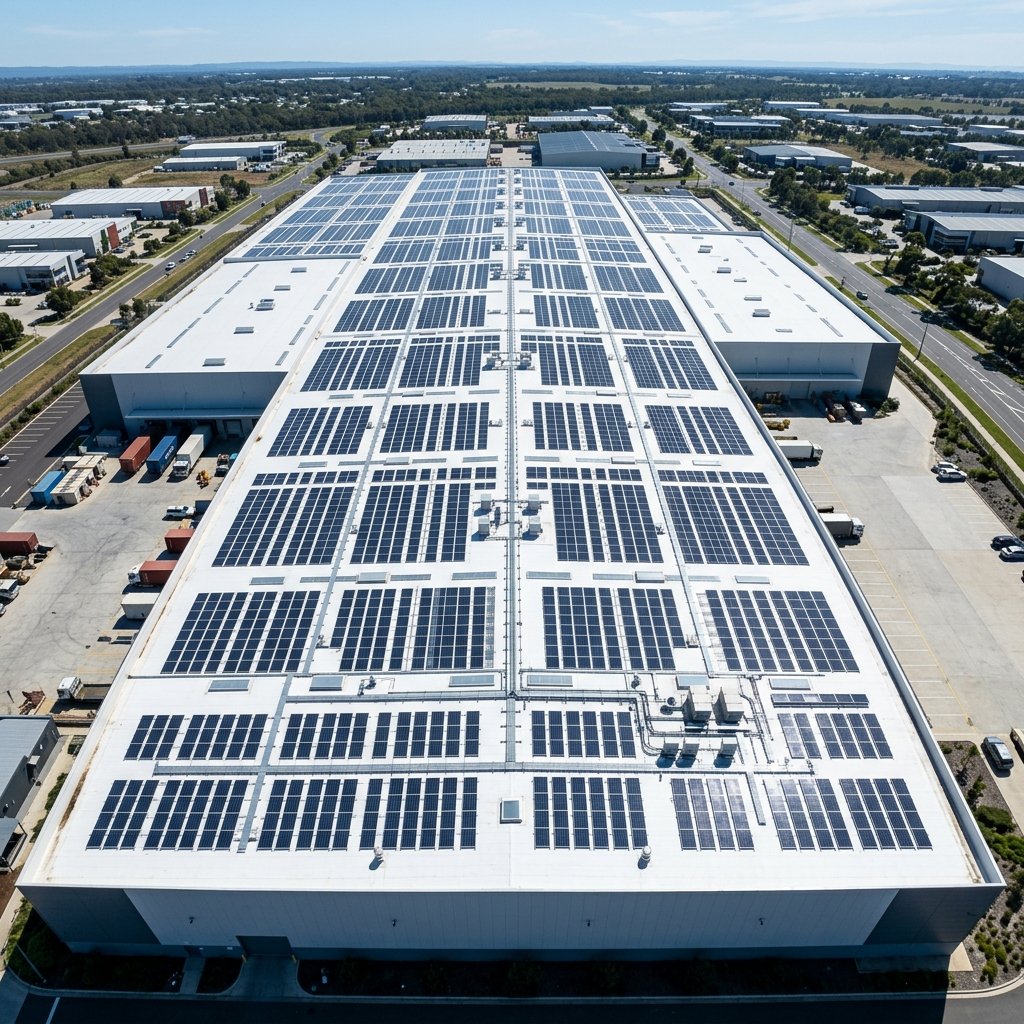
1. Mandatory Rooftop Solar PV Capacities
The required solar capacity is determined by plot size, building category, and connected electrical load:
- Industrial Plants (Plot Area > 1,000 Sq. Meters): Must install an on-site rooftop solar PV system with a capacity equal to at least 5% to 10% of their total connected electrical load (or a minimum capacity of 10 kWp, whichever is greater).
- Commercial Centers & Shopping Plazas: Must cover at least 25% of their total unobstructed rooftop area with solar PV panel arrays.
- Residential Gated Townships & Multi-Story Apartments: Solar arrays must be sized to generate sufficient power to offset common-area lighting, corridor ventilation, and water booster pumps.
- Institutional & Educational Campuses: Required to meet at least 15% of their baseline electrical demand through on-site solar generation.
2. Coastal Wind Load Engineering and Corrosion Resistance
Because Dholera SIR is located near the Gulf of Khambhat, rooftop solar structures must be engineered to withstand coastal weather conditions:
- High Wind Resistance (180 km/h): Solar mounting structures, clamps, and support frames must be designed to withstand wind gusts of up to 180 km/h (50 m/s) in compliance with IS 875 (Part 3) standards.
- Corrosion-Resistant Materials: To prevent degradation from saline coastal humidity, all mounting rails must be constructed from hot-dip galvanized steel (minimum 80-micron coating) or anodized aluminum (6000 series). Fasteners must be marine-grade stainless steel (SS304 or SS316).
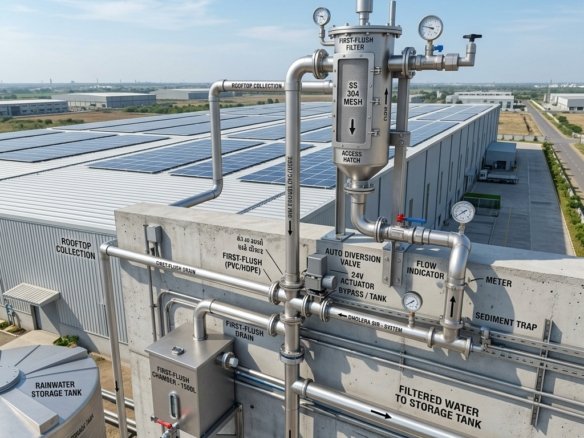
- Rooftop Drainage Pathways: Panel frames must be elevated at least 300mm above the finished roof slab, maintaining clear drainage paths to rainwater harvesting recharge inlets.
The table below outlines solar PV installation standards under DSIRDA GDCR:
| Development Category | Minimum Mandatory Solar PV Capacity | Structural Wind Load Rating | Inverter Protection Rating | Net Metering Integration |
|---|---|---|---|---|
| **Industrial Factories (>1,000 sq.m)** | 5% – 10% of Connected Load | 180 km/h Wind Gusts | IP65 Outdoor Rated | **Bidirectional High-Tension (HT)** |
| **Commercial Office High-Rises** | 25% of Unobstructed Roof Area | 180 km/h Wind Gusts | IP65 Outdoor Rated | **Bidirectional Low-Tension (LT)** |
| **Residential Townships / Apartments** | Sized for common utility load | 150 km/h Wind Gusts | IP65 Outdoor Rated | **Common-Meter Net Export** |
| **Logistics Warehouses (>5,000 sq.m)** | 50 kWp Minimum | 180 km/h Wind Gusts | IP66 with DC Isolation | **High-Tension Grid Feed** |
3. Torrent Power Smart Net Metering Integration
Surplus clean energy generated on rooftops can be exported back to the city’s power grid:
- Bidirectional Smart Meters: Torrent Power installs advanced bidirectional smart meters that track imported energy from the grid alongside exported solar power, crediting property owners on monthly utility bills.
- Rapid DC Isolation & Safety: To protect utility workers during maintenance outages, all rooftop solar inverters must feature automatic anti-islanding protection and a manual DC disconnect switch located at ground level.
Frequently Asked Questions (FAQ)
#### Is rooftop solar mandatory for industrial plots in Dholera SIR?
Yes. Under DSIRDA GDCR Section 11.4, industrial plots exceeding 1,000 square meters must install rooftop solar PV systems with a capacity equal to at least 5% to 10% of their connected electrical load.
#### What wind speed must rooftop solar panels withstand in Dholera?
Due to Dholera’s coastal proximity, solar panel mounting structures must be engineered to withstand wind speeds of up to 180 km/h (50 m/s).
#### How does net metering work with Torrent Power in Dholera?
Torrent Power installs bidirectional smart meters that measure both imported and exported electricity, providing utility bill credits for surplus solar energy fed back into the grid.
Download Dholera SIR 2026 Investor’s Kit
Get instant access to the official planning documents: Dholera Investment Handbook (PDF), 2026 Land Price List, TP Zone & Village Map, and the NRI Buying Guide.

Join The Discussion