

1. DSIRDA Mandatory Plot Thresholds
The regulations outline specific requirements for residential, commercial, and industrial plots:
- Mandatory Cut-off: Every building with a plot footprint of 100 square meters or more must construct an active rainwater harvesting (RWH) setup.
- Storage Sump Sizing: If a developer opts for a storage tank, the capacity must be calculated at a minimum of 20 liters per square meter of roof catchment area.
- Recharge Wells: For larger plots, excess rooftop runoff must be directed to an aquifer recharge well rather than flowing into the public storm drains.
2. Technical Filtration and Construction Standards
To ensure harvested water does not contaminate the local aquifer, the GDCR specifies standard filtration layer dimensions:
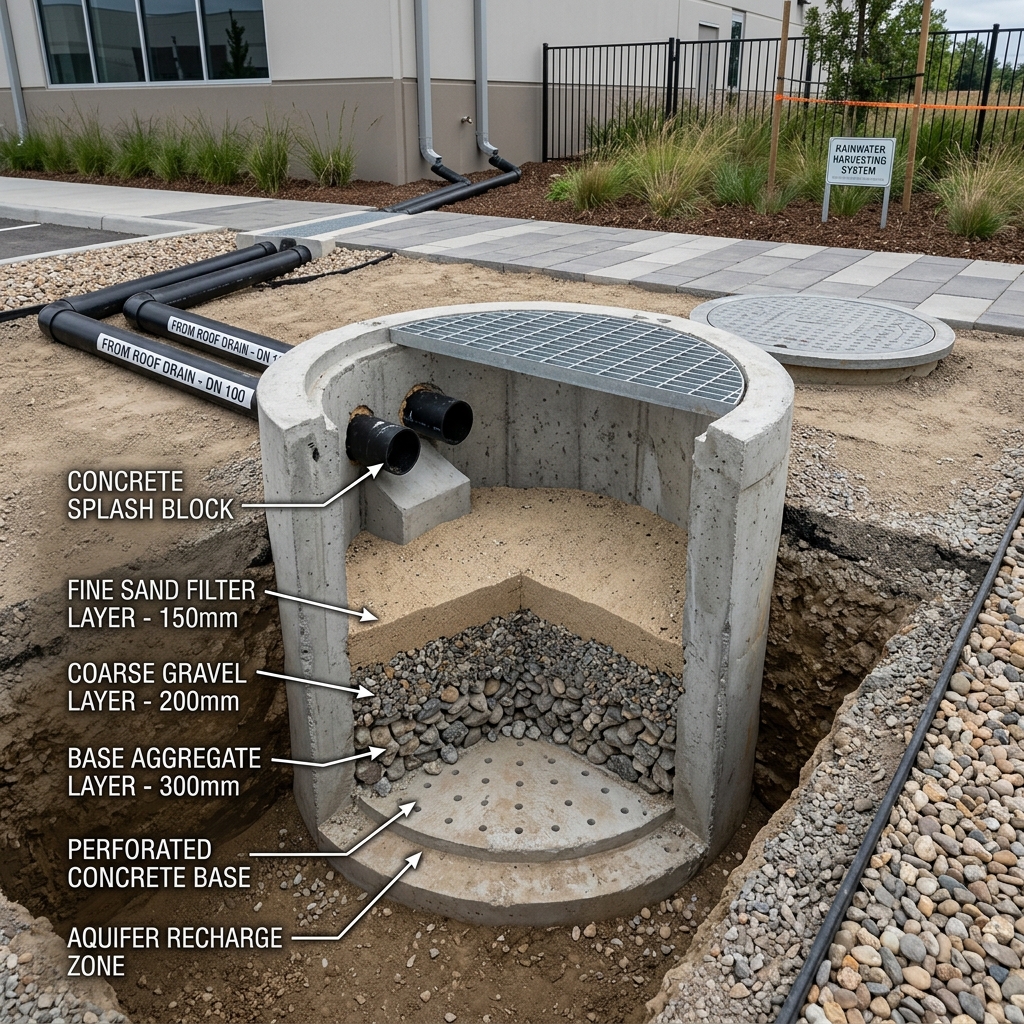
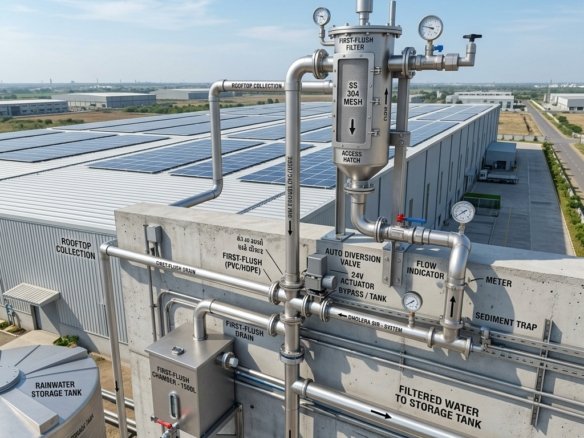
- Silt Traps: Downtake pipes from roof drains must first route water into a silt trap chamber to collect leaves, sand, and dust.
- Filtration Chamber Layers: The water must pass through a concrete filter chamber containing the following layers from top to bottom:
- Recharge Well Specifications: Recharge wells must be a minimum of 3.0 meters deep, lined with perforated concrete rings, and backfilled with gravel to allow water to seep into the soil.
The table below outlines RWH design specifications under DSIRDA:
| Plot Size Bracket (Sq. Meters) | Minimum Storage / Recharge Capacity | Required System Infrastructure |
|---|---|---|
| **100 to 250 Sq.m** | 5,000 Liters | Storage sump or single recharge well |
| **250 to 500 Sq.m** | 10,000 Liters | Dedicated silt trap, sand filter, and 1 recharge well |
| **500 to 1,000 Sq.m** | Calculated at 20L/sq.m of roof area | 2 recharge wells (minimum 3m depth each) |
| **Above 1,000 Sq.m** | Calculated at 20L/sq.m of roof area | Multi-stage filtration and recharge well array |
3. Environmental Impact: Combatting Aquifer Salinity
Dholera’s proximity to the Gulf of Khambhat makes its groundwater naturally saline. Implementing rainwater harvesting across the city serves a key environmental purpose:
- Freshwater Barrier: Injecting clean rainwater into the ground creates a freshwater lens that pushes back subsurface saltwater intrusion.
- Reducing Runoff: Keeping water on-plot reduces flow inside public stormwater channels during heavy monsoon events.
- Industrial Reuse: Many factories in TP2 treat and use harvested rainwater for cooling towers, reducing reliance on potable water supplies.
Frequently Asked Questions (FAQ)
#### Is rainwater harvesting mandatory for small plots in Dholera?
Yes. Under DSIRDA GDCR Section 11.2, any building constructed on a plot of 100 square meters or larger must have a functional rainwater harvesting system.
#### What happens if I don’t build a rainwater harvesting system?
DSIRDA will not issue a building Occupancy Certificate (OC) unless the rainwater harvesting installation has been inspected and certified by a registered engineer.
#### How deep must a recharge well be in Dholera?
Recharge wells must reach a minimum depth of 3.0 meters from the surface, utilizing perforated concrete rings to allow water filtration into the soil.
Download Dholera SIR 2026 Investor’s Kit
Get instant access to the official planning documents: Dholera Investment Handbook (PDF), 2026 Land Price List, TP Zone & Village Map, and the NRI Buying Guide.

Join The Discussion