


The Tax Structure of Land Reconstitution
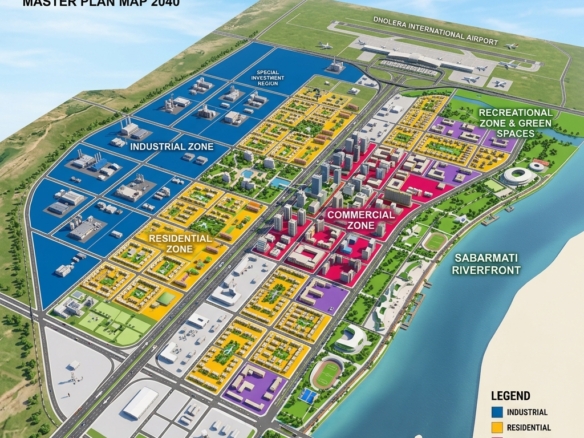
When an investor participates in Dholera’s Town Planning (TP) schemes, the government reconstitutes the land—returning 50% of the original area as a developed plot with clear zoning titles.
Key Tax Advantages of Land Reconstitution:
- Deferral of Capital Gains: The transfer of agricultural land to the development authority for pooling is not treated as a taxable sale, deferring capital gains liabilities until final sale.
- Zoning Title Upgrade: The agricultural land is reconstituted as a Non-Agricultural (NA) plot, significantly increasing the book value of the asset without triggering immediate development charges.
- Adjustment of Holding Period: For capital gains purposes, the holding period is calculated from the original date of agricultural land purchase, allowing long-term capital gains (LTCG) tax rates (20% with indexation) to apply.
Stamp Duty and Registration Fee Matrix
When purchasing or selling a reconstituted Final Plot (FP) in Dholera SIR, transactions are subject to stamp duty and registration fees set by the Gujarat State Government:
| Purchaser Profile | Stamp Duty Rate (on Jantri Value) | Registration Fee | Additional Surcharge | Total Legal Tax Rate |
|---|---|---|---|---|
| Male Buyer (Individual) | 4.9% | 1.0% | 0.0% | 5.9% |
| Female Buyer (Individual) | 4.9% | 1.0% (Exempt) | 0.0% | 4.9% |
| Corporate / LLC Entity | 4.9% | 1.0% | 0.0% | 5.9% |
| Joint Venture (JV) Partners | 4.9% | 1.0% | 0.0% | 5.9% |
Capital Gains Tax Exemptions for Dholera Landowners
Sellers of Dholera SIR plots can utilize several legal provisions under the Income Tax Act to reduce or eliminate their capital gains tax liabilities:
- Section 54EC (Capital Gains Bonds): Sellers can invest up to ₹50 Lakhs of capital gains profits in certified bonds (such as NHAI or REC) within 6 months of the sale to obtain complete tax exemption.
- Section 54F (Residential Reinvestment): If the sold land was a long-term capital asset, the seller can claim exemption by investing the net sales proceeds into purchasing or constructing a residential house in India.
- Agricultural Land Exemption (Section 2(14)): If the plot sold is classified as rural agricultural land (outside specified municipal limits and meeting population criteria), it is not treated as a capital asset, making the sale entirely tax-free.
Tax Compliance Checklist for Property Buyers
To ensure absolute compliance with the Income Tax Department during your Dholera land transaction, verify these key metrics:
- TDS Deduction on Land Sale: Under Section 194-IA, if the property transaction value exceeds ₹50 Lakhs, the buyer must deduct 1% TDS from the payment and deposit it online via Form 26QB.
- Verify Jantri Value (Circle Rates): Ensure the registration value matches or exceeds the government’s official Jantri value to prevent penal notices under Section 56(2)(x).
- Verify PAN Status of Seller: Always confirm the seller’s PAN is linked and active to avoid high-rate TDS deductions (up to 20%).
Disclaimer: This article is published by the editorial team at Dholera Acres for informational purposes only. It does not constitute formal financial, legal, or investment advice. While every effort has been made to verify the town planning regulations, FSI rules, and infrastructure timelines with official DSIRDA and DICDL publications, land investments are subject to market risks. Readers are strongly advised to perform independent legal due diligence and consult certified property advisors before making any transaction in Dholera SIR.
Frequently Asked Questions (FAQ)
Does the land pooling model trigger GST on plot allocations?
No, the allocation of reconstituted Final Plots (FPs) under the town planning pooling model by DSIRDA does not attract Goods and Services Tax (GST). Sale of raw land or developed plots is officially classified as neither a supply of goods nor services under Schedule III of the GST Act.
What is Jantri value and how does it affect stamp duty in Dholera?
Jantri value is the official circle rate set by the Gujarat government for land valuation in specific village blocks. Stamp duty and registration fees are computed on the transaction value or the Jantri value, whichever is higher.
How can NRIs repatriate funds after selling a plot in Dholera?
NRIs can repatriate sale proceeds up to $1 Million per financial year by submitting Form 15CA and 15CB (certified by a Chartered Accountant) to their bank, proving that all capital gains taxes have been paid in India.
Download Dholera SIR 2026 Investor’s Kit
Get instant access to the official planning documents: Dholera Investment Handbook (PDF), 2026 Land Price List, TP Zone & Village Map, and the NRI Buying Guide.


Join The Discussion