

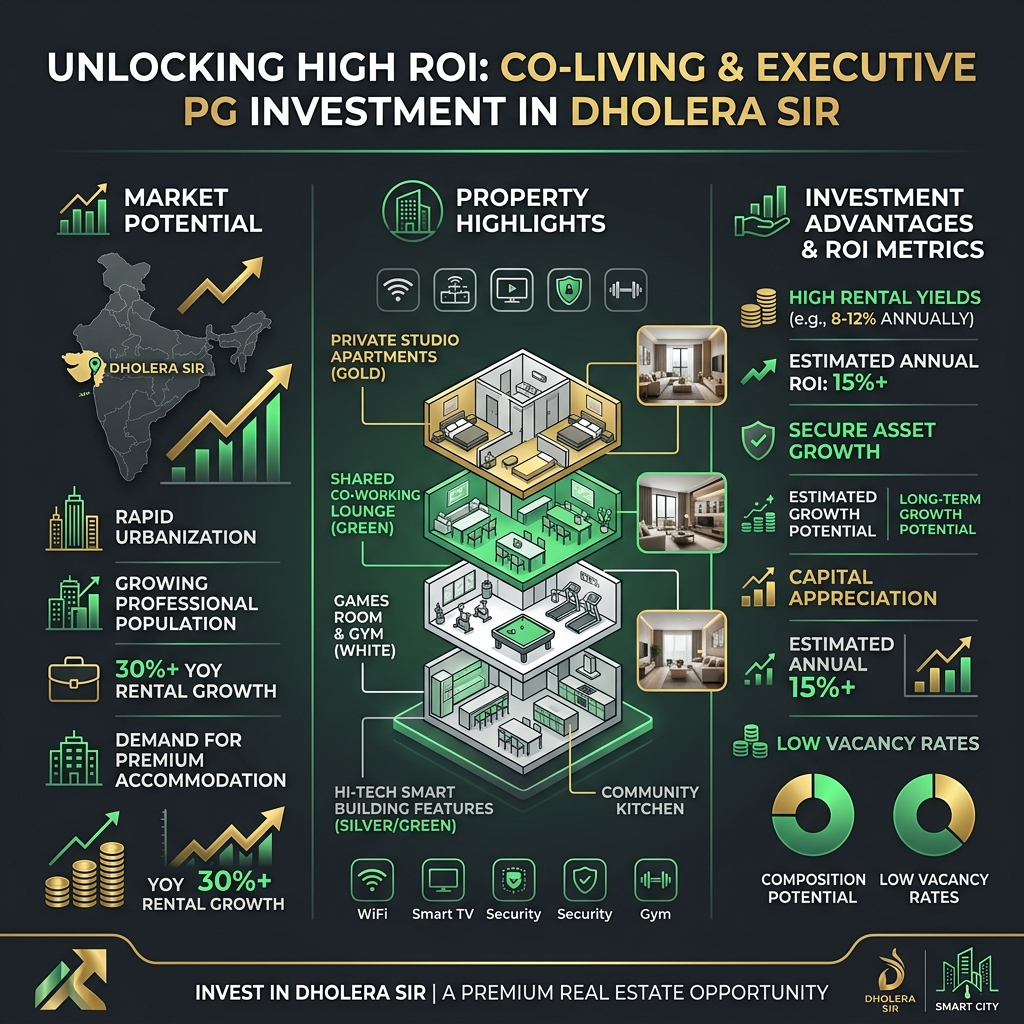
The Industrial Rental Boom: Tata Fab Workforce Impact
Unlike standard speculative land investments, the transition of Dholera SIR into an operational industrial city introduces cash-flow-yielding assets. The primary driver of this transition is the economic density of semiconductor fabrication plants and cleanroom environments:
- Workforce Demographics: The Tata-PSMC wafer fabrication facility employs a high ratio of highly paid semiconductor engineers, Taiwanese transit consultants, and technical operators requiring quality serviced housing.
- Logistics Supply Chain: Dozens of auxiliary suppliers (chemicals, packaging, gas, cleanroom maintenance) are setting up offices nearby, bringing administrative and corporate field teams.
- The Housing Deficit: While the government has built world-class industrial utility grids, residential housing construction has trailed behind. Industrial workers are currently forced to commute from Sanand or Ahmedabad, creating a direct opportunity for developers on-site.
Rental Yield and ROI Comparison Matrix
To guide HNI investors and developers evaluating multi-family housing projects, here is a comparative overview of expected capital appreciation and rental yields across different property classes in Dholera SIR (2026 data):
| Housing Property Class | Target Tenant Profile | Average Construction Cost (per Sq Ft) | Expected Monthly Rent (per Bed / Unit) | Projected Rental Yield (Annual) |
|---|---|---|---|---|
| Co-Living / PG Rooms | Factory Techs / Junior Operators | ₹1,500 – ₹1,800 | ₹4,500 – ₹6,000 / Bed | 9.0% – 12.5% |
| Serviced Studio Flats | Senior Engineers / Consultants | ₹1,800 – ₹2,200 | ₹18,000 – ₹25,000 / Unit | 7.5% – 9.5% |
| Standard 2BHK Apartment | Mid-Level Corporate Staff | ₹1,400 – ₹1,600 | ₹12,000 – ₹16,000 / Flat | 4.0% – 5.5% |
| Executive Guest House | Multinational Executives | ₹2,200 – ₹2,600 | ₹3,500 – ₹5,000 / Day (Corporate lease) | 8.5% – 11.0% |
Designing High-Yield Co-Living Blocks under DSIRDA Rules
To successfully build a co-living block or executive dormitory in Dholera SIR, you must align your architectural blueprints with DSIRDA building codes:
- Check Minimum Road Access: Co-living or PG blocks classified as multi-family commercial housing must face a road with a minimum width of 12 meters (preferably 18 meters for commercial approvals).
- Verify FSI Allocation: Use your base FSI (1.8 in residential zones) and purchase premium FSI (up to 2.5) from DSIRDA to build vertical floors, maximizing the number of rentable beds.
- Establish Fire & Safety Layouts: Ensure proper setbacks (front, side, rear) and double exit stairwells required for high-occupancy residential permits.
The Strategic Advantage of TP 1 for Co-Living
If your investment goal is immediate rental cash flow, Town Planning Scheme 1 (TP 1) is the optimal location.
As the designated “Activation Area,” TP 1 contains fully functional underground utility conduits. You do not need to invest private capital in setting up water boring, solar backup networks, or individual septic tanks—the connections for pressurized drinking water, storm-water, sewage, electricity, and high-speed fiber internet are already present at the boundary of your reconstituted Final Plot (FP). This significantly reduces construction startup times.
Disclaimer: This article is published by the editorial team at Dholera Acres for informational purposes only. It does not constitute formal financial, legal, or investment advice. While every effort has been made to verify the town planning regulations, FSI rules, and infrastructure timelines with official DSIRDA and DICDL publications, land investments are subject to market risks. Readers are strongly advised to perform independent legal due diligence and consult certified property advisors before making any transaction in Dholera SIR.
Frequently Asked Questions (FAQ)
What is co-living, and how does it differ from a standard apartment?
Co-living is a modern housing model where residents rent individual private bedrooms or shared rooms, while sharing common amenities like kitchens, laundry facilities, lounges, and gym spaces. It offers higher economic efficiency for tenants and generates higher rent per square foot for landlords compared to standard flat rentals.
Are there ready rental agreements with corporations in Dholera?
Yes, many major manufacturing firms entering Dholera SIR actively seek long-term corporate lease agreements (typically 3 to 5 years) for entire co-living blocks or guest houses to secure accommodation for their engineering teams before factory operations begin.
Can I build a PG or co-living facility on a residential plot?
Yes, DSIRDA development rules allow the construction of boarding houses, PGs, and residential apartments on plots zoned for residential use, provided you obtain the necessary commercial usage clearances and comply with access road width rules.
How can Dholera Acres assist in co-living investments?
At Dholera Acres, we help developers identify premium, high-FSI, NA NOC Title Clear plots in TP 1 and TP 2 that face wide roads (12m to 24m) and are legally approved for high-density co-living construction, saving you months of legal and zoning verification.
Download Dholera SIR 2026 Investor’s Kit
Get instant access to the official planning documents: Dholera Investment Handbook (PDF), 2026 Land Price List, TP Zone & Village Map, and the NRI Buying Guide.

Join The Discussion