

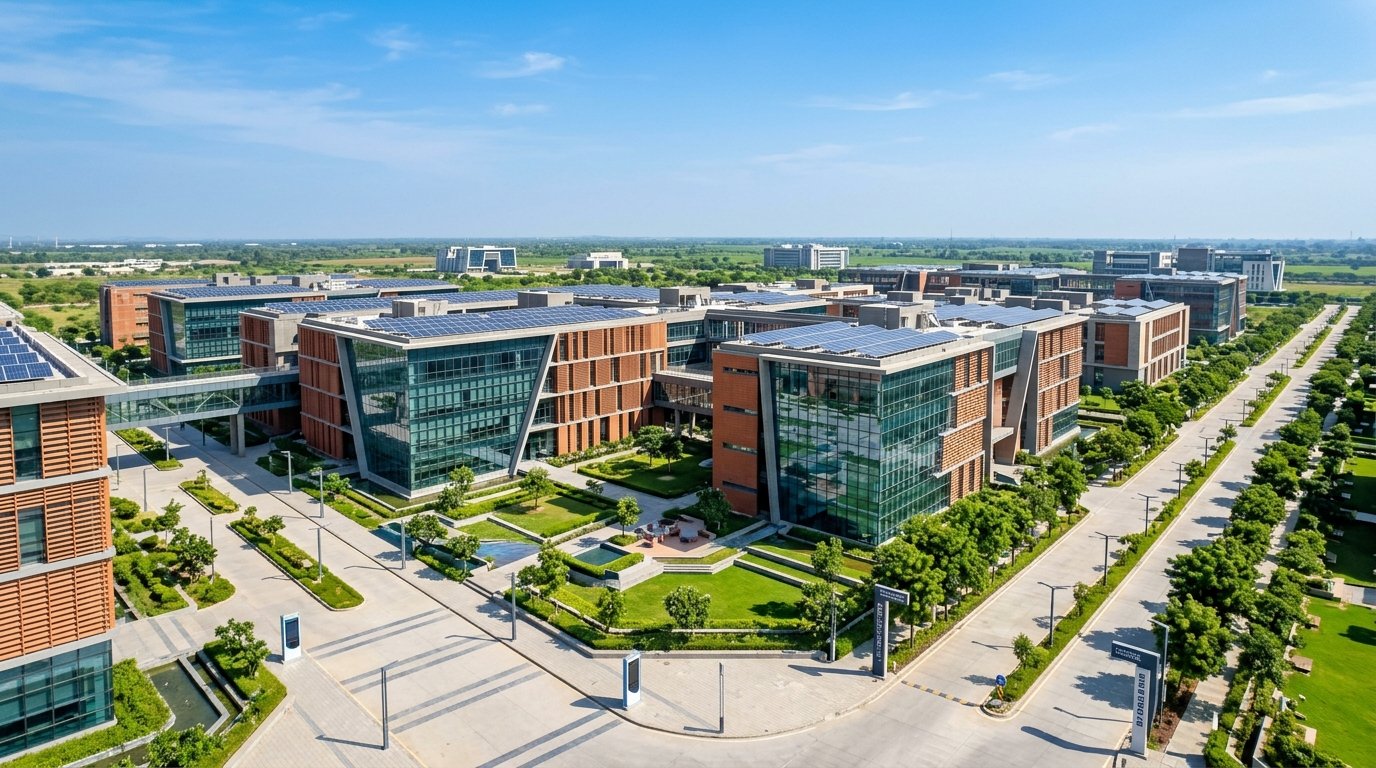
Architectural Master Plan of Dholera Knowledge & IT Zone
Unlike haphazard educational clusters in older Indian cities, Dholera’s Knowledge Zone is master-planned as a cohesive, plug-and-play research and learning ecosystem:
“` +—————————————————————————————————-+
| DHOLERA KNOWLEDGE & IT ZONE ECOSYSTEM | |
|---|---|
| [Central Knowledge & IT Corridor (TP1 & TP2 Spine)] | |
| +—> 1. Semiconductor & VLSI Design Skill Center | |
| – Cleanroom training labs & wafer inspection simulators | |
| – Direct talent pipeline to Tata Electronics & PSMC fab | |
| +—> 2. Global University Partner Campuses | |
| – Degree programs in AI, Robotics, Renewable Energy & Precision Engineering | |
| – Integrated student dormitories, sports complexes & libraries | |
| +—> 3. Corporate R&D & Software Technology Parks (STPI) | |
| – High-speed redundant optical fiber grid with automated SCADA | |
| – Incubators for clean-tech and aerospace hardware startups | |
| v | |
| [Surrounding Real Estate Catalysts] | |
| – High demand for student hostels & co-living rental housing | |
| – Commercial retail avenues: cafeterias, bookstores, transit hubs, and private clinics |
+—————————————————————————————————-+ “`
Key Technical Parameters:
- Zoning Designation: Knowledge & IT / Institutional (K&IT) with specialized FSI allowances (Base FSI of 2.0 to 3.0, expandable with chargeable FSI).
- Utility Support: Dedicated dual-circuit Torrent Power feeds, smart water meters, automated waste segregation, and high-speed multi-operator fiber-optic telecom ducting.
- Pedestrian & Transit Focus: Integrated dedicated cycle tracks, wide landscaped walking plazas, and planned feeder stops connecting to the semi-high-speed rail corridor.
The Semiconductor Skill Imperative: Feeding the Fab Ecosystem
The multi-billion-dollar semiconductor fabrication plant being established by Tata Electronics in collaboration with Taiwan’s Powerchip Semiconductor Manufacturing Corporation (PSMC) in Dholera requires thousands of specialized technicians and VLSI engineers.
To prevent critical talent shortages: 1. Specialized Fab Training Academies: State and private institutions are establishing hands-on cleanroom simulation labs in the Knowledge Zone to train chemical engineers, lithography technicians, and vacuum equipment specialists. 2. Gujarat Semiconductor Mission (GSM) Tie-Ups: Academic partnerships with premier institutes like IIT Gandhinagar, Pandit Deendayal Energy University (PDEU), and international polytechnics provide fast-track certification for local engineers. 3. Apprenticeship Living Quarters: Direct institutional proximity enables students to split their semesters between academic lectures in the Knowledge Zone and practical shift work on the factory floor.
Real Estate Multiplier: How the Knowledge Zone Drives Land Prices
Educational and university hubs historically serve as recession-proof real estate drivers. The influx of thousands of students, researchers, professors, and administrative staff creates sustained, non-cyclical demand for commercial and residential space:
“` +—————————————————————————————————-+
| KNOWLEDGE ZONE HOUSING DEMAND CHAIN | |
|---|---|
| [15,000+ Students & Faculty by 2028-2030] ===> Immediate Need for Student Hostels & Co-Living | |
| v | |
| [Plotted Residential Sectors within 1 to 3 km] | |
| – 150 to 300 Sq. Yard Villa Plots converted to Co-Living Suites | |
| – Consistent Rental Yields: 8.0% to 11.5% per annum | |
| v | |
| [Commercial Retail Corridors Fronting 30m / 55m Roads] | |
| – Cafeterias, laundromats, stationery, printing & clinics |
+—————————————————————————————————-+ “`
Micro-Market Valuation Snapshot around Knowledge & IT Zone (2026):
| Sector / Zone | Distance to Knowledge City | Allowed Development Type | 2026 Price Bracket (₹ / Sq. Yard) | Projected 3-Year Appreciation Trajectory |
|---|---|---|---|---|
| TP1 Institutional Fringe | < 1 km | Mixed-Use Commercial / Residential | ₹6,500 – ₹10,200 | High rental demand from professors & corporate researchers |
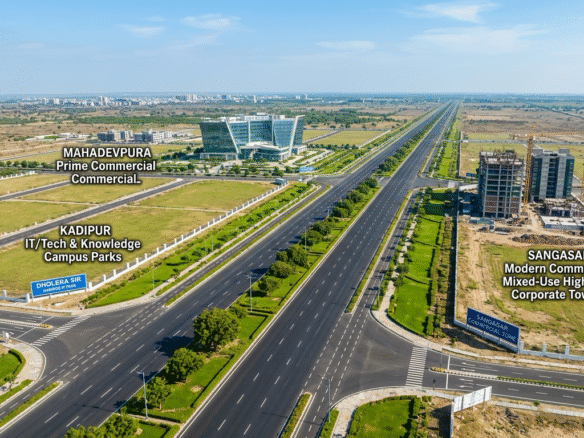
| TP1 Residential (Hebatpur / Kadipur) | 1 – 3 km | Gated Townships / Villas | ₹5,500 – ₹8,800 | Prime student co-living hostel developments |
| TP2 Knowledge Buffer | 2 – 4 km | High-Density Residential (R3/R4) | ₹4,500 – ₹7,200 | Affordable student housing campuses & shared apartments |
| Peripheral Commercial Strips | Road Frontage | Retail / Food Courts / Gyms | ₹7,500 – ₹12,500 | Consistent high cash-flow rental yields |
Note: Indicative pricing brackets based on prevailing private transaction records and micro-market surveys. Dynamic adjustments occur based on final plot (FP) demarcation and arterial road access.
Legal & Zoning Considerations for Institutional Plot Buyers
Private education trusts, corporate training academies, and real estate developers looking to build student accommodation must observe key statutory guidelines:
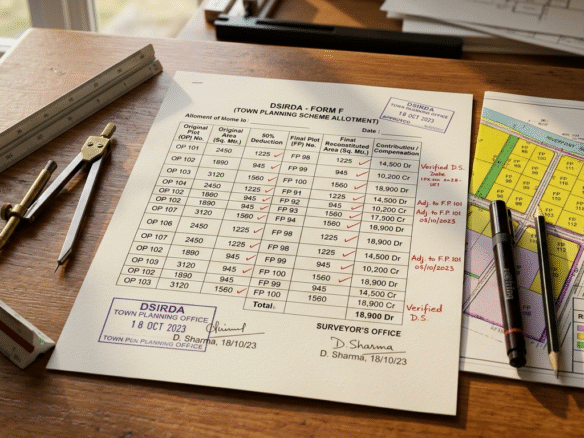
- Verify DSIRDA Permissible Use Matrix: Ensure the Final Plot (FP) zoning explicitly authorizes Institutional / Educational or High-Density Residential (R3/R4) development with necessary parking ratios.
- Review Collector NA Order: Confirm that the land has obtained a formal Non-Agricultural (NA) order under the institutional or commercial category.
- Setback & Open Space Compliance: Educational buildings in Dholera must maintain strict statutory fire safety setbacks, minimum 18m or 30m road access, and dedicated green open space buffers as prescribed by DSIRDA Comprehensive Development Control Regulations (GDCR).
Statutory Land Investment & Valuation Disclaimer
> [!NOTE] > Land prices across Dholera Special Investment Region vary dynamically based on Town Planning (TP) scheme allocation, Final Plot (FP) zoning (Residential, Commercial, Industrial, Knowledge & IT), road width (18m, 30m, 55m, 70m), and utility duct proximity. All transactions must be cross-verified against official Gujarat Revenue Department Jantri circle rates and DSIRDA development control regulations.
Frequently Asked Questions (FAQs)
#### What is the Knowledge & IT Zone in Dholera SIR?
The Knowledge & IT Zone (Knowledge City) is a designated institutional and technology sector within Dholera SIR’s master plan (predominantly across TP1 and TP2) earmarked for higher education universities, semiconductor skill academies, corporate R&D campuses, and biotechnology research centers.
#### How does the Knowledge Zone benefit residential plot investors?
Universities and technical skill academies bring thousands of students, faculty members, and research staff into the region. This generates immense, permanent demand for co-living student housing, hostels, dining facilities, and local retail, allowing residential plot owners to achieve high rental yields (8% to 11% annually).
#### What FSI is permitted for educational and institutional buildings in Dholera?
DSIRDA regulations provide favorable Floor Space Index (FSI) allocations for institutional and educational buildings, typically offering a base FSI of 2.0 to 3.0, with additional FSI purchasable depending on road width and campus footprint.
#### Can private investors build student hostels in the residential sectors near Knowledge City?
Yes. Investors owning approved non-agricultural (NA) residential final plots in Town Planning Scheme 1 (TP1) or Scheme 2 (TP2) can construct student dormitories, co-living hostels, or executive rental apartments, subject to standard DSIRDA building plan sanctions.
Download Dholera SIR 2026 Investor’s Kit
Get instant access to the official planning documents: Dholera Investment Handbook (PDF), 2026 Land Price List, TP Zone & Village Map, and the NRI Buying Guide.

Join The Discussion