


Navigating the regulatory landscape is crucial for successful land investment in any jurisdiction, and Dholera Special Investment Region is no exception. While Dholera offers streamlined regulations compared to many Indian cities, understanding the comprehensive legal framework, compliance requirements, and regulatory processes is essential for protecting investments and ensuring smooth transactions. This detailed guide explains Dholera’s regulatory architecture, key compliance requirements, and practical considerations for investors.
The Regulatory Authority Structure
Dholera’s development is governed by the Dholera Special Investment Region Development Authority (DSIRDA), a statutory body established under the Gujarat Infrastructure Development Act. This Authority serves as the primary regulatory and planning agency, overseeing all aspects of land use, development control, infrastructure provision, and regulatory compliance within the Dholera SIR.
DSIRDA functions as a single-window clearance mechanism, streamlining approvals that in many cities require coordination across multiple government departments. This institutional framework reduces bureaucratic complexity and provides investors with a clear point of contact for regulatory matters.
The Authority operates under policies and guidelines established by the Gujarat government but has substantial autonomy in day-to-day regulatory decisions. Understanding DSIRDA’s organizational structure, decision-making processes, and stakeholder engagement mechanisms helps investors navigate the regulatory environment effectively.
Town Planning Schemes: The Foundation of Land Regulation
Dholera’s land development is organized through Town Planning (TP) Schemes, a planning tool established under the Gujarat Town Planning and Urban Development Act. These TP schemes are the fundamental regulatory instruments that determine land use, plot boundaries, road layouts, infrastructure provision, and development rights.
Each TP scheme covers a defined geographical area and undergoes a formal preparation and approval process. The process includes draft scheme publication, stakeholder consultations, objections and suggestions period, final scheme approval, and implementation with defined timelines for land acquisition, infrastructure development, and plot allotment.
For investors, the most critical aspect of TP schemes is understanding what they govern. They determine final plot sizes and boundaries, which may differ from original land parcels due to land pooling and reconstitution; road alignments and widths; reservation of land for public purposes including parks, schools, hospitals, and civic amenities; and land use designations specifying whether plots are designated for residential, commercial, industrial, or mixed use.
Before investing in any plot, verifying that it falls within an approved TP scheme and understanding the scheme’s provisions affecting that plot is essential. Plots outside approved TP schemes face legal ambiguities and may not receive infrastructure or development approvals.
Currently, TP1 and TP2 are the most advanced schemes in Dholera, with infrastructure development underway and plot allotments being conducted. Additional TP schemes are in various stages of preparation and approval, expanding the developable area progressively. Investors should verify the status of the specific TP scheme affecting their investment plot.
Land Use Classification and Zoning Regulations
Dholera’s master plan establishes clear land use zoning to ensure orderly development and prevent incompatible uses from coexisting. The primary land use categories include residential zones for housing and related amenities; commercial zones for retail, offices, and business activities; industrial zones for manufacturing and processing units; institutional zones for educational institutions, hospitals, and government facilities; and recreational zones for parks, sports facilities, and public open spaces.
Mixed-use development is permitted in designated areas, allowing integration of residential, commercial, and limited office uses. These mixed-use zones create vibrant urban environments and reduce travel distances for daily activities, aligning with smart city principles.
Zoning regulations specify permissible activities within each zone, prohibited activities, and conditional activities requiring special approvals. For example, residential zones prohibit heavy industrial activities but may permit home-based businesses under certain conditions. Understanding these use restrictions ensures investments align with intended purposes and avoid future compliance issues.
Changing land use designations is possible but requires formal applications to DSIRDA, justification for the change, and compliance with master plan objectives. Such changes are not automatic and are evaluated based on compatibility with surrounding uses and infrastructure capacity.
General Development Control Regulations (GDCR)
GDCR represents the detailed building and development code applicable in Dholera. These regulations specify technical parameters for all construction and development activities, ensuring consistency, safety, and aesthetic coherence across the city.
Key GDCR provisions include plot coverage regulations specifying the maximum percentage of plot area that can be covered by buildings, ensuring adequate open space; setback requirements mandating minimum distances between buildings and plot boundaries, providing light, ventilation, and fire safety; height restrictions limiting building heights based on road widths and plot locations, controlling urban density and maintaining sight lines; and parking requirements specifying mandatory parking spaces based on building use and size, preventing traffic congestion.
Floor Space Index is a critical GDCR parameter determining the total built-up area permissible on a plot. Dholera’s FSI regulations vary by land use, with residential areas typically having base FSI around 1.8 to 2.5, commercial areas having higher FSI to enable dense development, and industrial areas having FSI based on manufacturing needs. Premium FSI can be purchased in designated areas, allowing developers to exceed base FSI by paying additional charges.
Building design guidelines within GDCR address architectural aesthetics, facade treatments, material specifications, and sustainability features. While allowing creative freedom, these guidelines ensure buildings contribute positively to urban character and environmental performance.
Land Acquisition and Ownership Framework
Land ownership in Dholera follows frameworks established under Gujarat land revenue laws and the specific provisions of TP schemes. Original agricultural landowners receive compensatory plots or financial compensation when their land is included in TP schemes. The land pooling mechanism ensures original owners participate in development benefits while enabling systematic urban development.
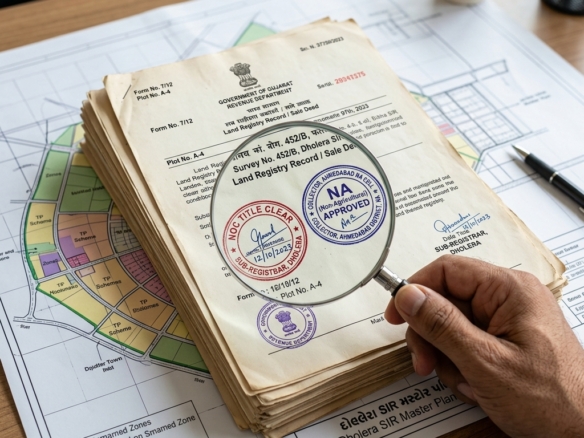
Purchased plots come with clear title documentation including 7/12 extracts showing land ownership records, property cards with plot details, and NA (Non-Agricultural) certificates confirming development permissions. Buyers must verify these documents before transactions and ensure registration with appropriate government authorities.
Foreign Direct Investment in land is subject to national regulations. While FDI is generally permitted in development of townships, housing, and built-up infrastructure, pure land banking or land trading by foreign entities faces restrictions. NRI investors typically face fewer restrictions than other foreign investors but should verify compliance with FEMA regulations and RBI guidelines.
Joint ownership, corporate ownership through Special Purpose Vehicles, and partnership structures are all permissible, each with specific documentation and tax implications. Legal counsel should be engaged to structure ownership optimally based on investor circumstances.
Building Plan Approvals and Construction Permits
Construction requires formal building plan approval from DSIRDA. The approval process involves submission of detailed architectural drawings, structural designs, utility connections plans, and compliance certificates from qualified professionals. The Authority reviews submissions for GDCR compliance, structural safety, fire safety provisions, and environmental considerations.
The single-window clearance system in Dholera consolidates approvals that in many cities would require separate submissions to multiple departments. This streamlining reduces approval timeframes significantly compared to other jurisdictions, though compliance with all requirements remains mandatory.
Commencement certificates are issued after plan approval, authorizing construction to begin. During construction, periodic inspections verify compliance with approved plans. Completion certificates are issued after construction finishes and inspections confirm compliance, enabling occupancy and utility connections.
Unauthorized construction or deviation from approved plans attracts penalties, demolition orders, or compliance notices. Strict adherence to approved plans and obtaining proper approvals for any modifications protects investments and avoids legal complications.
Environmental and Sustainability Regulations
Dholera’s smart city vision includes robust environmental and sustainability regulations exceeding minimum legal requirements. Green building certifications are encouraged and incentivized, with benefits for LEED-certified buildings or equivalent standards. Energy efficiency standards mandate minimum performance for new constructions, promoting sustainable urban development.
Water conservation measures include rainwater harvesting requirements for plots above certain sizes, treated wastewater reuse for landscaping and non-potable uses, and efficient plumbing fixtures to reduce water consumption. These measures are particularly important given Gujarat’s water scarcity challenges.
Waste management regulations require segregation at source for residential and commercial properties and promote recycling and composting. Solar power integration is encouraged through net metering provisions and preferential approvals for solar installations.
Environmental impact assessments are required for industrial projects above defined thresholds, ensuring industrial development doesn’t compromise environmental quality. Compliance with central and state pollution control norms is mandatory for all industrial operations.
Transfer and Transaction Regulations
Property transfers in Dholera follow Gujarat’s stamp duty and registration requirements. Stamp duty rates apply at state-defined percentages on transaction values, representing a significant transaction cost that buyers must account for. Registration at the appropriate sub-registrar office is mandatory for legal validity of transfers.
Documentation for transfers includes sale deeds with complete property descriptions and consideration details; encumbrance certificates confirming no pending legal claims; tax clearance certificates showing no outstanding property taxes; and NOCs from relevant authorities where applicable. Incomplete documentation can delay registrations or create future legal challenges.
Timing considerations affect transaction strategies. Financial year-end deadlines for capital gains tax, timing of infrastructure completions that may affect values, and alignment with personal liquidity and financial planning all factor into transaction timing decisions.
Lock-in periods or transfer restrictions may apply to plots allotted through government auctions or special schemes, preventing immediate resale. Understanding these restrictions before purchase prevents liquidity surprises.
Tax Regulations and Compliance
Property taxation in Dholera includes stamp duty payable at registration; property tax levied annually by the development authority based on plot value and built-up area; capital gains tax on sale, with rates depending on holding period; and GST implications for under-construction properties or services rendered.
Tax planning strategies can optimize overall tax burden. Timing of purchases and sales affects capital gains classification and tax rates. Utilization of capital gains exemptions available under income tax laws can reduce tax liabilities. Joint ownership structures may distribute tax burdens favorably. Professional tax advice tailored to individual circumstances is recommended.
Tax compliance documentation should be maintained meticulously, including all payment receipts, assessment orders, and correspondence with tax authorities. Tax disputes, while hopefully rare, require complete documentation for effective resolution.
Dispute Resolution and Legal Recourse
Despite best efforts at compliance, disputes can arise from boundary disagreements with neighbors, conflicts over infrastructure provision or delays, building code violations by developers, or contractual breaches. Understanding dispute resolution mechanisms helps manage such situations effectively.
DSIRDA provides internal grievance redressal mechanisms for matters within its jurisdiction. Many disputes can be resolved through these administrative channels without formal legal proceedings. For contractual disputes between private parties, civil courts have jurisdiction, though arbitration clauses in contracts may provide faster resolution.
The Gujarat Real Estate Regulatory Authority (RERA) provides recourse for disputes involving registered real estate projects, offering structured complaint mechanisms and timelines. While Dholera’s regulatory framework is distinct, RERA provisions apply to qualifying projects.
Legal representation by counsel familiar with Dholera’s specific regulatory environment is advisable for complex disputes. Generic real estate lawyers may not be fully versed in Dholera’s unique institutional and legal architecture.
Regulatory Trends and Future Changes
Dholera’s regulatory environment continues evolving as the city develops. Recent trends include digitization of approval processes through online portals, reducing paperwork and improving transparency; refinement of FSI regulations to balance density with livability; and enhanced sustainability requirements aligning with global best practices and India’s climate commitments.
Future regulatory changes may address emerging needs such as autonomous vehicle infrastructure regulations, smart building integration requirements, and circular economy principles in construction. Staying informed about regulatory developments helps investors anticipate changes and adapt strategies accordingly.
Public consultations before major regulatory changes provide stakeholders opportunities to provide input. Active engagement with the development authority and industry associations keeps investors informed and allows their perspectives to shape regulatory evolution.
Compliance Best Practices
Successful navigation of Dholera’s regulatory environment requires adopting systematic compliance practices. Engaging qualified professionals including lawyers for legal due diligence, architects for design and approvals, and chartered accountants for tax planning provides specialized expertise. While professional services involve costs, they prevent expensive mistakes and legal complications.
Maintaining comprehensive documentation of all transactions, approvals, correspondence, and compliance activities creates an audit trail valuable for future references or dispute resolution. Digital documentation with cloud backups ensures records aren’t lost.
Periodic compliance reviews verify that properties remain compliant with regulations, property taxes are current, necessary renewals are completed timely, and no violations have occurred inadvertently. Proactive compliance management prevents accumulation of issues.
Staying informed through official DSIRDA communications, attending stakeholder meetings, subscribing to regulatory updates, and networking with other investors provides early awareness of regulatory changes and market developments.
Conclusion
Dholera’s regulatory framework, while comprehensive, is designed to enable rather than obstruct development. Understanding the institutional architecture, key regulations, compliance requirements, and procedural steps empowers investors to navigate the system effectively and protect their investments.
The streamlined single-window clearance, clear documentation requirements, and professional development authority distinguish Dholera positively from many Indian cities where regulatory complexity can frustrate even sophisticated investors. However, this advantageous regulatory environment doesn’t eliminate the need for thorough due diligence and professional guidance.
For investors willing to invest time in understanding regulations, engaging qualified professionals, and maintaining diligent compliance practices, Dholera offers a regulatory environment conducive to successful land investment and development. The clarity and consistency of regulations reduce uncertainty and provide confidence in long-term investment planning, contributing to Dholera’s overall attractiveness as an investment destination.

Join The Discussion