

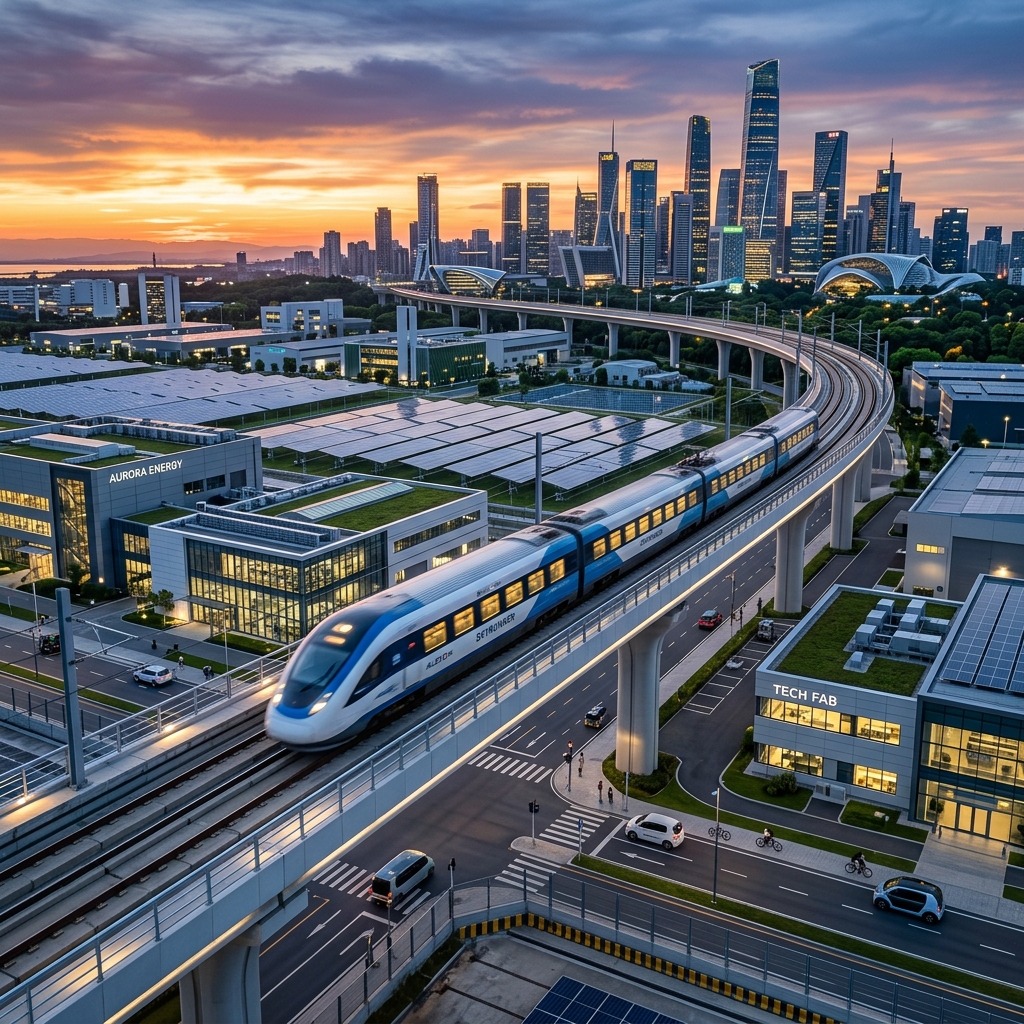
The ₹20,667 Cr Ahmedabad-Dholera Rail Corridor: What You Need to Know
In Dholera SIR news, the Central Cabinet has formally approved a ₹20,667 crore semi-high-speed rail link connecting Ahmedabad directly to Dholera.
This is a massive logistics upgrade for the region:
- Passenger & Cargo Transits: Designed to handle both high-frequency passenger trains (cutting travel time to under 30 minutes) and heavy cargo freight.
- Industrial Integration: Connects Dholera SIR directly to the main Indian railway network and the Delhi-Mumbai Dedicated Freight Corridor (DFC).
- Economic Impact: Reduces supply-chain transit costs for local manufacturers by up to 25%, establishing Dholera as Gujarat’s premier industrial export gateway.
For real estate, transportation infrastructure is the ultimate value creator. Properties along transit hubs and high-speed links historically experience a steep valuation curve as the project moves from approval to execution.
Tata Semiconductor SEZ: A Dedicated Chip Ecosystem
Following the ongoing construction of the ₹91,000 crore Tata Electronics semiconductor fabrication facility, the Central Government has allocated land for a dedicated Tata Semiconductor Special Economic Zone (SEZ) in Dholera SIR.
This SEZ is designed to house:
- Primary raw material suppliers (gas, chemical, cleanroom developers).
- Ecosystem equipment manufacturers and sub-assembly suppliers.
- Advanced assembly, testing, and packaging (OSAT) units.
This SEZ status grants tax exemptions, fast-tracked customs clearance, and dedicated single-window municipal approvals. The consolidation of these businesses within a single zone guarantees a high density of commercial operations and employment, accelerating the demand for surrounding residential plots and commercial facilities.
2026 Project Impact Matrix
| Project / Milestone | Core Purpose | Land Price Impact (Projected) | Key Target Zones | Timeline |
|---|---|---|---|---|
| Ahmedabad-Dholera Rail Corridor | Semi-high-speed transit for passenger & cargo. | 35-40% Appreciation along transit line. | TP 2 & TP 3 Corridor Plots | Approved (May 2026) |
| Tata Semiconductor SEZ | Dedicated high-tech industrial cluster. | 40-50% Appreciation near industrial borders. | TP 1 & TP 2 Industrial Zones | Land Allocated (2026) |
| Dholera International Airport | Passenger and international cargo hub. | 30-45% Appreciation along airport road. | TP 3 & TP 4 Airport Zone | Operations (Late 2026) |
Which TP Schemes Gain the Most from the New Approvals?
The impact of these transit and industrial anchors will be highly concentrated along specific corridors:
- TP 1 (Core Activation Area): As the most build-ready zone with active utilities, TP 1 is the primary destination for executive housing, co-living units, and corporate offices serving the upcoming Tata SEZ workforce.
- TP 2 (High-Access Expressway Corridor): Sits directly adjacent to the rail line alignment and the Ahmedabad-Dholera Expressway. It is highly suited for commercial towers, hotels, and retail plazas that will service passenger transit hubs.
- TP 3 (Airport Corridor): The intersection of the rail corridor, the expressway, and the upcoming Dholera International Airport makes TP 3 the ultimate play for logistics, corporate offices, and premium residential land.
Frequently Asked Questions
1. How does the Ahmedabad-Dholera Rail Corridor impact property values?
High-speed rail connectivity reduces travel time between Ahmedabad and Dholera to under 30 minutes. This turns Dholera SIR from an isolated industrial city into a connected satellite economy of Ahmedabad. Historically, high-speed rail corridors in regions like NCR (Delhi-Meerut RRTS) and Europe have driven adjacent land values up by 2x to 3x within 3 to 5 years of project commencement.
2. What is the difference between buying land inside the Tata SEZ vs. outside?
The Tata Semiconductor SEZ is strictly reserved for industrial and manufacturing enterprises approved by the government. Individual investors cannot buy plots inside the SEZ. However, buying NA NOC Title Clear residential or commercial plots directly outside the SEZ boundaries (in TP 1 and TP 2) allows you to capture the massive demand for employee housing, offices, and retail amenities generated by the SEZ ecosystem.
3. Is a RERA registration required for plots near the new rail corridor?
Under Indian law, individual land parcels and reconstituted Final Plots (FPs) do not require RERA registration. RERA is mandatory for developers constructing residential projects or commercial complexes. If you are investing in raw, individual land, the legal gold standard documents you must verify are the official Non-Agricultural (NA) conversion order from the revenue department and the DSIRDA NOC.
Disclaimer: This article is published by the editorial team at Dholera Acres for informational purposes only. It does not constitute formal financial, legal, or investment advice. While every effort has been made to verify the town planning regulations, FSI rules, and infrastructure timelines with official DSIRDA and DICDL publications, land investments are subject to market risks. Readers are strongly advised to perform independent legal due diligence and consult certified property advisors before making any transaction in Dholera SIR.
Download Dholera SIR 2026 Investor’s Kit
Get instant access to the official planning documents: Dholera Investment Handbook (PDF), 2026 Land Price List, TP Zone & Village Map, and the NRI Buying Guide.

Join The Discussion