

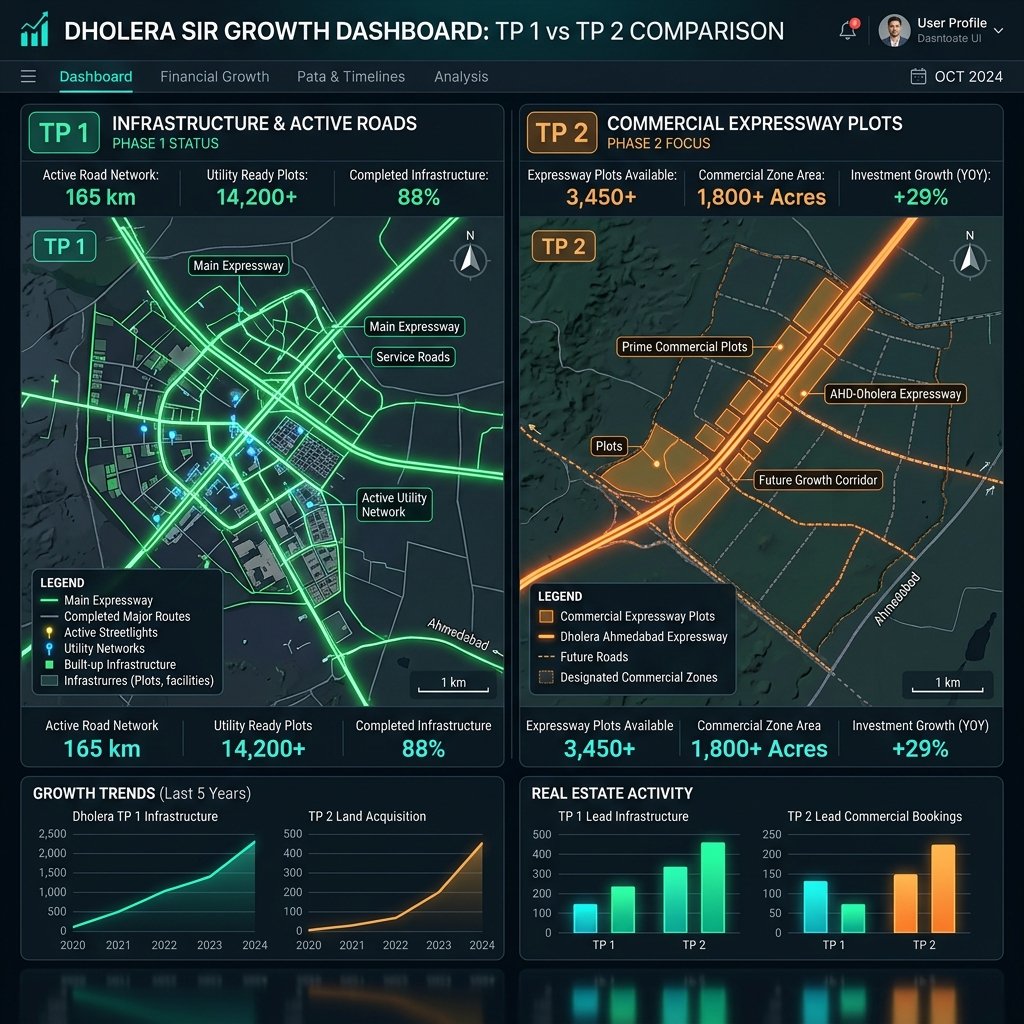
Executive Summary: TP-1 vs TP-2 at a Glance
| Feature / Metric | Town Planning Scheme 1 (TP-1) | Town Planning Scheme 2 (TP-2) |
|---|---|---|
| **Primary Master Plan Role** | **Activation Hub, Industrial Core & Administrative Enclave** | **Residential Capital, Knowledge City & Mixed-Use Hub** |
| **Total Notified Scheme Area** | ~149 Square Kilometers | ~102 Square Kilometers |
| **Activation Area Status** | Fully Operational (22.5 sq. km within TP-1) | Secondary Trunk Infrastructure Underway |
| **2026 Indicative Price Range** | **₹8,000 – ₹16,000+ per Sq. Yard** | **₹3,500 – ₹6,500 per Sq. Yard** |
| **Minimum Investment Ticket Size** | ₹15 Lakhs to ₹50+ Lakhs | ₹4 Lakhs to ₹15 Lakhs |
| **Trunk Infrastructure Readiness** | **100% Operational** (Water, Power, Roads, SCADA) | **Gradual Rollout** (Major corridors laid) |
| **Key Anchor Landmarks** | ABCD Building, DICDL Plug-and-Play Hub, High-Tech Parks | Central Residential Corridors, Knowledge Parks, Sangasar Hub |
| **Target Holding Horizon** | 1 to 3 Years (Immediate construction or high liquidity) | 4 to 7 Years (High capital appreciation) |
| **Investor Profile** | Corporates, Industrialists, High-Net-Worth Individuals | Retail Investors, Salaried Buyers, Wealth Builders |
Infrastructure Comparison: Physical Reality on the Ground
“`mermaid flowchart TD subgraph TP1[“Town Planning Scheme 1 (TP-1)”] A1[“ABCD Command & Control Centre”] –> B1[“Operational Multi-Utility Sub-Surface Ducts”] B1 –> C1[“Pressurized Potable Water & Recycled Lines”] C1 –> D1[“100% Live 24×7 Power Substation Grid”] end subgraph TP2[“Town Planning Scheme 2 (TP-2)”] A2[“Direct Adjacency to TP-1 Activation Core”] –> B2[“Primary 55m & 70m Sector Roads Laid”] B2 –> C2[“High-Density Residential Sector Grids”] C2 –> D2[“Rapid Private Plotted Layout Execution”] end “`
Infrastructure Maturity in TP-1
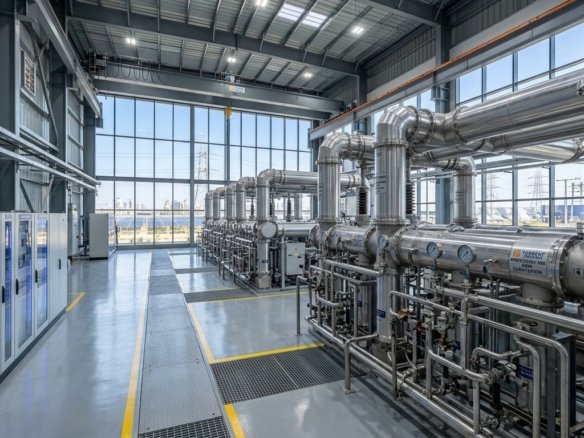
TP-1 represents the crown jewel of Central and Gujarat Government capital deployment under the Delhi-Mumbai Industrial Corridor (DMIC) mandate: * The ABCD Building: The Administrative and Business Centre for Dholera serves as the operational headquarters of the DICDL and DSIRDA, featuring a fully integrated City Command and Control Centre (SCADA-driven city management). * Smart Multi-Utility Underground Ducts: Roads in the TP-1 activation core feature underground concrete trenches carrying electrical cables, optical fiber, potable water lines, and sewage pipes, preventing any future road digging. * Operational Trunk Utilities: The 50 MLD water treatment facility, 10 MLD sewage treatment plant, and 24×7 Torrent Power distribution grid are physically live and catering to early manufacturing facilities. * Direct High-Speed Connectivity: TP-1 features immediate access to the six-lane Ahmedabad-Dholera Expressway terminal point.
Infrastructure Maturity in TP-2
TP-2 is deliberately engineered as the residential and civic spine that will house the hundreds of thousands of professionals working within TP-1’s manufacturing clusters: * Arterial Connectivity: Major 55-meter, 70-meter, and 250-meter transit corridors traversing TP-2 are graded and structurally aligned, connecting Navagam and Sangasar directly to the Ahmedabad Expressway. * Secondary Infrastructure Expansion: While sub-surface utility trenches are not universally live across every secondary street in TP-2 as they are in the TP-1 core, private developers provide self-contained underground drainage, overhead water storage, and concrete internal roads. * Green Spaces and Town Planning Dedications: Under the Gujarat Town Planning and Urban Development Act, TP-2 features generous reservations for neighborhood parks, institutional schools, healthcare centers, and sports corridors.
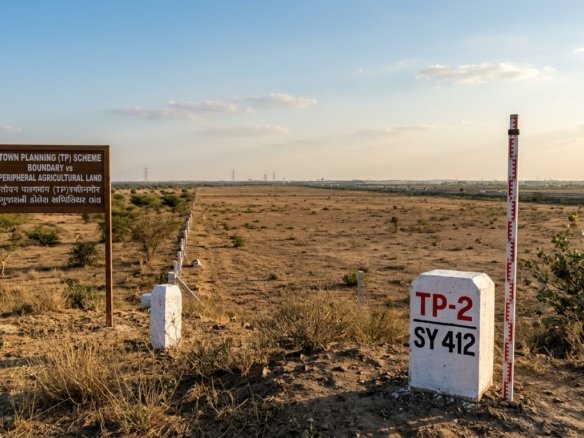
To view exact survey numbers and scheme boundaries, consult our Dholera SIR Boundary Map & Village Directory.
Comprehensive Pricing Analysis: TP-1 vs. TP-2 (2026)
The valuation disparity between TP-1 and TP-2 represents the classic real estate tradeoff between immediate utility and high-velocity capital appreciation:
| Micro-Sector / Land Category | TP-1 Indicative Rates (₹ / Sq. Yd.)* | TP-2 Indicative Rates (₹ / Sq. Yd.)* | Valuation Premium / Disparity |
|---|---|---|---|
| **Standard Residential Final Plot (FP)** | ₹8,000 – ₹12,000 | ₹3,500 – ₹5,500 | TP-1 is ~120% to 150% higher |
| **Arterial Main Road Facing (24m–55m)** | ₹12,000 – ₹18,000 | ₹5,500 – ₹8,000 | TP-1 commands corporate premium |
| **Commercial / Mixed-Use Plots** | ₹14,000 – ₹22,000+ | ₹6,000 – ₹9,500 | TP-1 suitable for commercial HQ |
| **Industrial / Logistics Formats** | Available via DICDL allotment | Limited / Select boundaries | Industrial concentrated in TP-1 |
\All rates reflect non-agricultural (NA) land with sanctioned layout approvals. Government duties and registration fees are additional.*
Why the Price Gap Exists:
- Utility Readiness: In TP-1, an investor or corporate can obtain building permit approval tomorrow, connect to city sewer lines, and begin RCC construction immediately. In TP-2, development is transitioning from layout development to early-stage building construction.
- Scarcity of Private Land in TP-1: A substantial majority of land within the TP-1 Activation Area is owned or directly allotted by the government (DICDL) for mega industrial projects, making the limited available private freehold residential and commercial plots exceptionally scarce and expensive.
- Plotted Inventory Volume in TP-2: TP-2 contains a much higher proportion of private town planning reconstituted Final Plots (FPs), providing abundant inventory for retail investors at accessible entry points.
Zoning & Development Regulations (DSIRDA GDCR 2023)
Building development in both schemes is governed by the Dholera Special Investment Region Development Authority General Development Control Regulations (GDCR) 2023:
“` Zoning Focus in TP-1: High-Tech Industrial, Heavy Engineering, Defense/Aerospace, Corporate Office Towers Zoning Focus in TP-2: High-Density Residential Plotted, Group Housing, Educational Hubs, City Centers
Base FSI in TP-1: 1.50 to 2.50 (Commercial corridors allow up to 4.00 with premium FSI purchase) Base FSI in TP-2: 1.50 (Residential standard, extendable to 2.00 to 2.50 along transit corridors)
Maximum Permissible Height: – TP-1: Up to 45 to 70+ meters (Allowing high-rise corporate and IT towers subject to AAI NOC) – TP-2: Up to 15 to 30 meters (Mid-rise residential complexes and independent villas) “`
Investment Horizon & Expected ROI Modeling
Where should you put your capital? Here is how a ₹10 Lakh investment performs across both schemes over a 5-year to 7-year holding period:
“`mermaid graph LR subgraph InvestmentPath[“Strategic Capital Allocation”] Direction[“Choose Your Strategy”] Direction –>|”Capital Safety & Fast Liquidity”| ChoiceA[“Invest in TP-1 Core”] Direction –>|”Maximum Capital Multiplier”| ChoiceB[“Invest in TP-2 Expansion”] end ChoiceA –> OutcomeA[“Target: 10% – 15% Annualized Return\nLower Volatility | Instant Resale”] ChoiceB –> OutcomeB[“Target: 18% – 25% Annualized Return\nHigh Growth | Residential End-User Boom”] “`
Scenario A: Buying in TP-1 (The Capital Preservation Play)
- Initial Capital: ₹10,00,000
- Purchasable Area: ~80 to 100 Sq. Yards (or fractional commercial holding)
- Expected 5-Year Milestone: High-density industrial workforce influx creates robust demand for corporate leasing and executive guest houses.
- Projected 5-Year Valuation: ₹18,00,000 – ₹22,00,000 (Approx. 12% to 15% CAGR).
- Key Strength: Near-instant secondary market liquidity; safe capital preservation asset.
Scenario B: Buying in TP-2 (The High-Growth Wealth Creation Play)
- Initial Capital: ₹10,00,000
- Purchasable Area: ~200 to 250 Sq. Yards in a prime Sangasar/Navagam residential layout
- Expected 5-Year Milestone: Completion of primary neighborhood infrastructure; residential homebuilding begins in scale.
- Projected 5-Year Valuation: ₹25,00,000 – ₹32,00,000 (Approx. 18% to 24% CAGR).
- Key Strength: As TP-2 bridges the pricing gap with TP-1, your capital appreciation is accelerated by volume growth (owning 2.5x more square yardage).
Explore vetted investment properties across both sectors on our All Properties and Plots Portal.
Verdict: Which Scheme Should You Choose?
Choose TP-1 If:
- You have a higher investment budget (₹15 Lakhs to ₹1 Crore+).
- You intend to build immediately or establish a business, corporate office, or industrial service center.
- You prioritize 100% operational smart utilities and immediate exit liquidity over raw land acreage.
Choose TP-2 If:
- You are an individual retail or salaried investor with a budget between ₹4 Lakhs and ₹15 Lakhs.
- Your objective is maximizing total capital appreciation over a 5 to 8-year investment horizon.
- You want to acquire larger land parcels (150 to 300+ sq. yards) to construct a spacious residential home or long-term rental duplex when the city achieves population density.
Frequently Asked Questions
Which is closer to Dholera Airport: TP-1 or TP-2?
Both schemes are equidistant to the Dholera International Airport access spine. However, TP-2 sits marginally closer to the primary residential-to-airport link corridors, with travel times ranging between 20 and 30 minutes via planned arterial connections.Can I build a residential house in TP-1?
Yes. While TP-1 is primarily celebrated for its industrial and administrative activation area, the master plan includes designated residential sectors (City Centre and Neighborhood Residential zones) where residential construction is fully sanctioned under DSIRDA GDCR 2023.Are land titles equally secure in both TP-1 and TP-2?
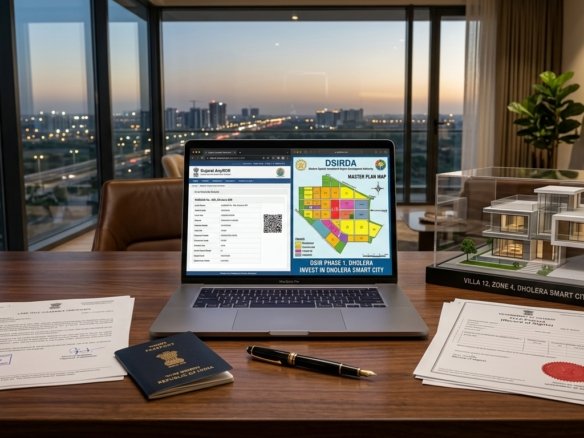
Title security is identical provided you acquire a reconstituted Final Plot (FP) with an official Collector Non-Agricultural (NA) order and DSIRDA-sanctioned layout. The Town Planning scheme mechanism administered by the Gujarat Town Planning and Urban Development Act applies with equal legal force across both TP-1 and TP-2.Why are plot sizes generally larger in TP-2 than TP-1?
Because base land prices in TP-2 are more affordable (₹3,500 to ₹6,500/sq. yd. vs. ₹8,000 to ₹16,000+/sq. yd. in TP-1), developers in TP-2 configure layouts with standard 150 to 300 sq. yard plots suited for private residential villas. In TP-1, higher land valuations drive compact 100 to 150 sq. yard plots to maintain manageable capital ticket sizes.Is the Ahmedabad-Dholera Expressway directly accessible from TP-2?
Yes. The expressway terminates into the central Dholera arterial grid with planned cloverleaf interchanges directly feeding the 55-meter and 70-meter town planning roads that traverse both TP-1 and TP-2.JSON-LD Schema Markup
Download Dholera SIR 2026 Investor’s Kit
Get instant access to the official planning documents: Dholera Investment Handbook (PDF), 2026 Land Price List, TP Zone & Village Map, and the NRI Buying Guide.

Join The Discussion